
Workforce planning before the first hire
Issue 11 · September 17, 2026 · 4 min read
Five details EDCs, workforce boards and training partners can use to turn a project announcement into a working plan.
Read the original LinkedIn edition ↗
A new project announcement tells a community what may be coming. It rarely tells a college when a course needs to start or a workforce board when to begin recruiting people.
I would start that conversation with one question: which jobs need to be filled first?
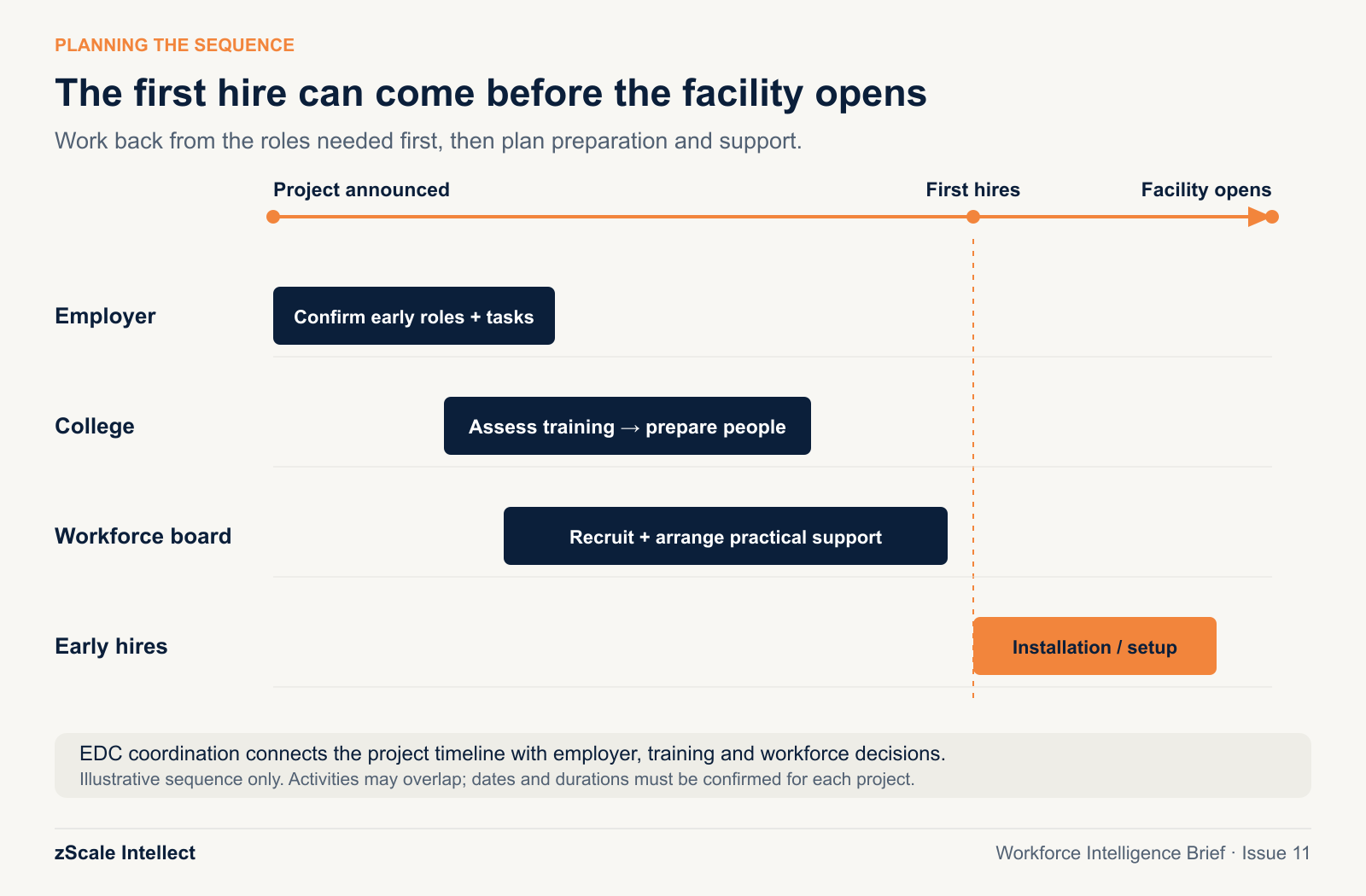
That gives the employer and regional partners something specific to work through. A technician needed during equipment installation may need different preparation from someone joining after production begins. A supplier may be hiring on a different schedule from the company in the announcement.
Recent Brookings research by Rachel Lipson and Allison Schwartz explains why established industry classifications can miss parts of emerging industries. Their semiconductor example includes suppliers whose hiring begins before a fabrication plant starts production. It is a useful reason to bring employer information into the discussion alongside regional labor data.
Make the first meeting specific
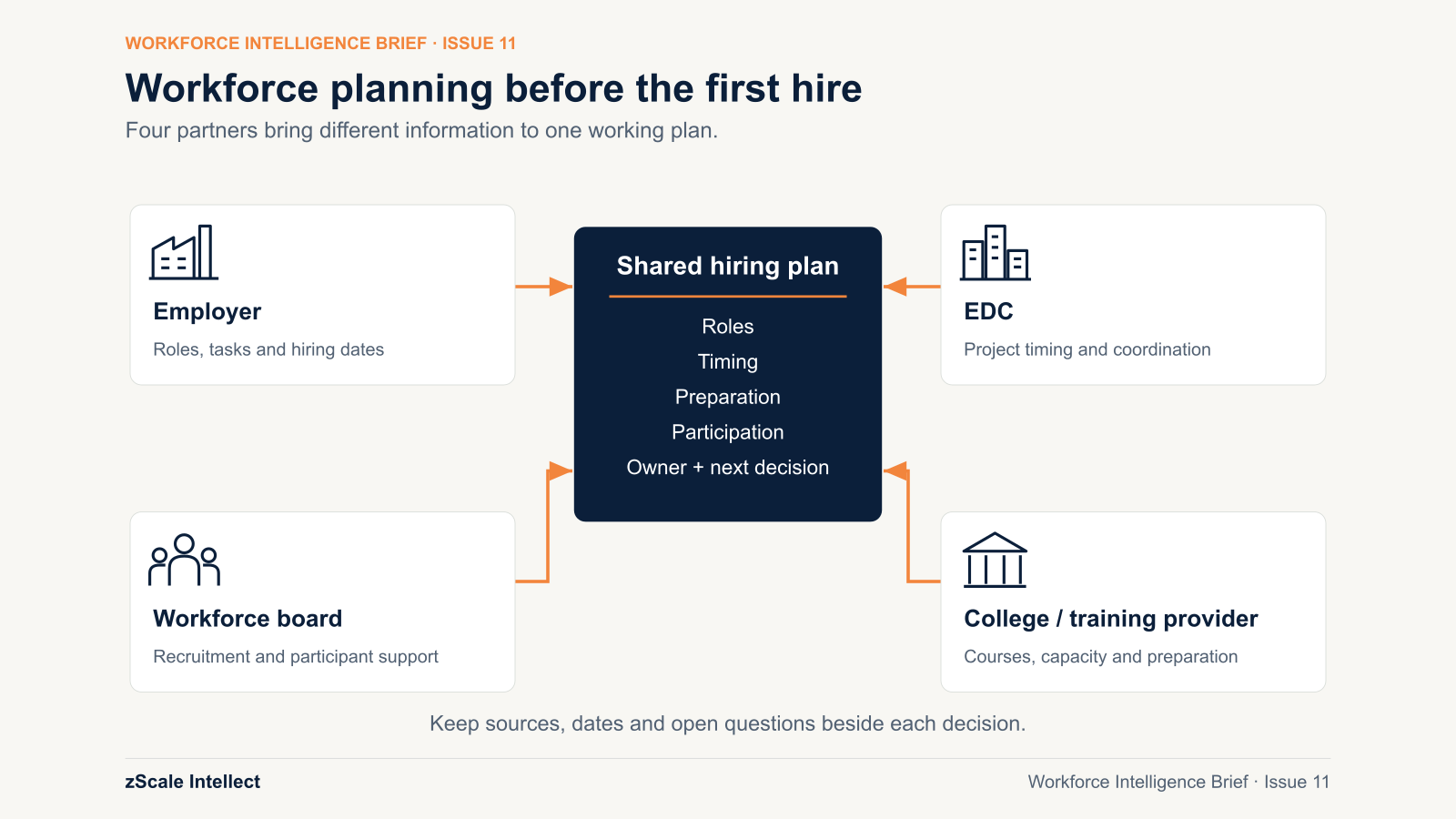
My starting point would be a short working brief that everyone can review together. It needs five details.
1. The first roles to be filled: Ask the employer which positions come first and what people will actually do. A job title alone may leave a college guessing about the equipment, tasks or level of experience involved. Separate skills needed on arrival from skills the employer can teach after hiring.
2. The hiring date and what could change it: Record when the employer expects people to start work. Keep that date separate from the facility opening and the full hiring target. If it is provisional, say so. Construction progress or equipment delivery may change what partners can reasonably prepare for.
3. A realistic route into the work: A college can assess whether an existing course covers the tasks or needs an adjustment. The workforce board can help identify who might be ready to enter that training. Experienced workers changing industries may need a different route from people entering the workforce for the first time.
4. The practical conditions people need to participate: Training times, pay, transportation and child care can affect whether someone can take up an opportunity. Ask about work schedules and training locations early enough for partners to respond. A course that fits an employer's requirements still needs to work for the people taking it.
5. A named person and a next decision: Record who will confirm the role requirements, who will review the training options and when the group will meet again. Where information is uncertain, name the person who can resolve it. The next meeting should have a decision to make.
What preparation can look like
A July 2025 announcement from Wake Tech in North Carolina offers a concrete example. Its BioMechatronics Apprenticeship began with nine apprentices and three employer partners: CSL Seqirus, FUJIFILM Biotechnologies and Eli Lilly.
The eight-month program combined subjects such as electrical systems, motor controls and programmable logic controllers with preparation for biopharmaceutical work. Apprentices were paid from their first day, with full-time on-the-job training planned after the initial program.
The announcement describes the program's design, not a completed evaluation of its results. What I find useful is the specificity: named employers, defined technical preparation and a clear sequence between training and work.
Every region will have different employers and resources. That level of detail gives partners a way to assess what they can offer and what they still need to confirm.
Keep the evidence close to the plan
For each important detail, I would keep the source and date beside it. An employer-confirmed requirement, a public announcement and an estimate should be easy to tell apart.
Regional employment figures can help describe the scale of an industry. College completions can show the volume of recent awards. Neither, on its own, tells us how many people are available for a particular job on a particular date.
As I build zScale Intellect, this is the kind of conversation I want the platform to support: bringing project details, workforce information and training options together so regional partners can decide what to do next.
For the next employer meeting, I would take a page with five prompts:
- Which roles come first?
- When does hiring need to begin?
- What preparation is needed before someone starts?
- What would help people take part?
- Who will confirm the next detail, and by when?
An EDC can help connect that page to the project timeline. A workforce board can connect it to recruitment and participant support. A college can assess the training. The employer can confirm whether the plan reflects the work.
Which detail is hardest for your team to confirm early: the roles, hiring dates or training requirements? I would be interested to hear how you handle it.
I write the Workforce Intelligence Brief every other Thursday for economic development teams and workforce boards. Subscribe for practical examples of how communities prepare for employer growth and connect people with training and work.