Every Texas Region Is Asking the Same Workforce Question
Issue 09 · August 20, 2026 · 7 min read
Reflections from the Basic Economic Development Course, five Texas talent programs and the shared workforce questions emerging across different regions.
Read the original LinkedIn edition ↗
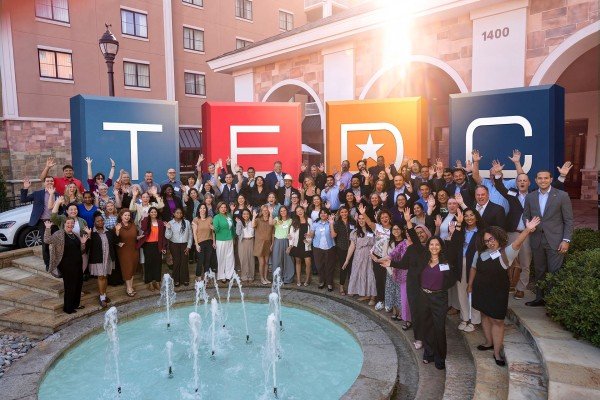
Last week I spent 4 days at the Basic Economic Development Course in Southlake with 70+ EDC leaders from West Texas to East Texas to the Valley to Central Texas. Live conversations with EDC leaders from so many cities in one place gave me a lot more perspective than what data from DFW alone had shown me earlier. A high school program in Stephenville grew from 2 students to 76 in three years. That was one of a dozen moments last week that reframed how I think about workforce planning!
This issue covers three areas. The first is what the past 5 months of my newsletters made visible about DFW workforce planning. The second is what I learned through my interactions with EDC leaders at BEDC last week. The third is five named talent programs from Texas EDCs that other regions could learn from.
When I started five months ago, I was reading DFW workforce mostly at the metro level. I pulled BLS DFW data, Federal Reserve regional labor market reports and Texas Workforce Commission occupational demand projections.
Going city by city changed that.
Plano seems to be focusing on corporations with AT&T's $1.35 billion HQ relocation, JPMorgan Chase's tech buildout, Toyota North America's ongoing growth and the Texas Research Quarter. Frisco is running a talent-retention play built on quarterly EDC-workforce alignment meetings. Fort Worth's north corridor is stacking manufacturing wins that reach 6,000 confirmed jobs across advanced electronics at AllianceTexas and aerospace at Eagle Parkway. Arlington's 2024 class of E-Space, Salcomp and Mozee is building against a Tarrant labor pool that GM Arlington's 5,677-person assembly line already draws from. Grapevine lives entirely on sales tax and hotel occupancy tax from tourism. Southlake is holding as the $250K-median-income corporate residential base. Mansfield has four new industries opening inside the next 24-month window. Hurst is holding on to the retail and Bell aerospace legacy. NRH is running a redevelopment plan and relies heavily on sales-tax.
That is nine cities, nine demand shapes and one shared talent supply from TCC, Collin College, UNT, TCU, UTA, Dallas College, Weatherford College and TSTC.
BEDC changed the read in two ways.
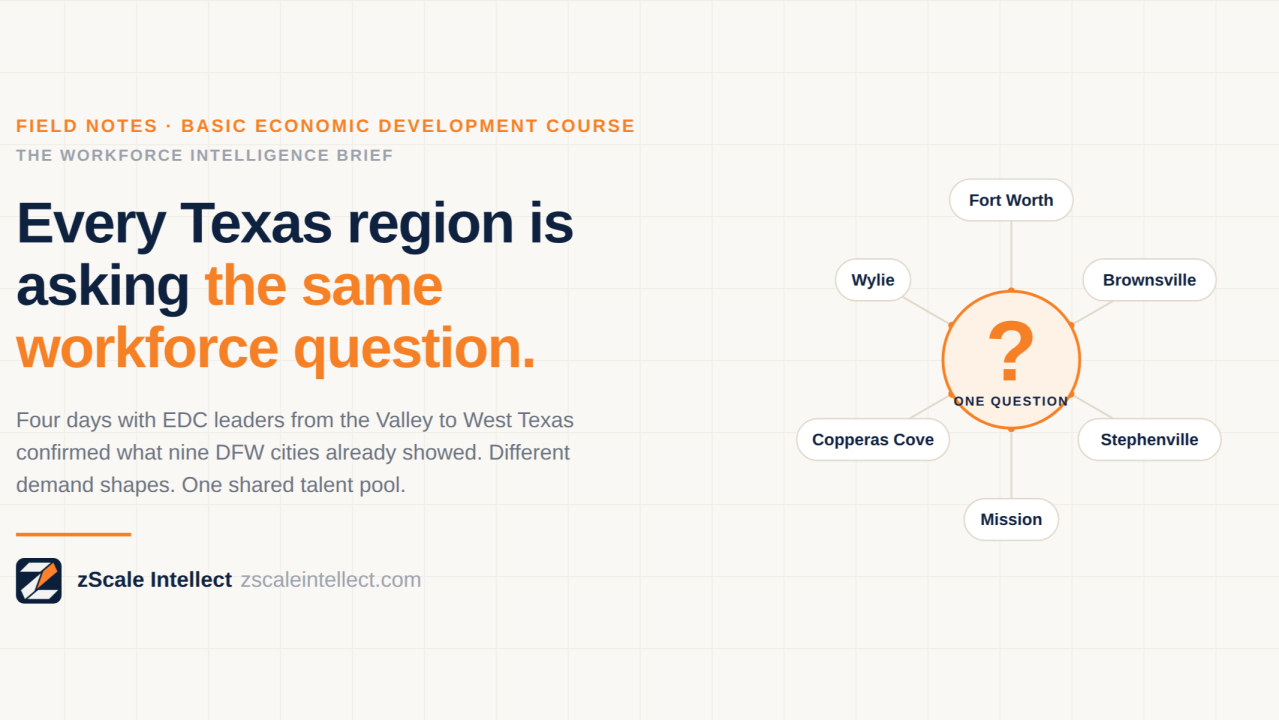
First, the pattern I was seeing in DFW is not unique. Every EDC leader in the room had a version of the same problem. Brownsville is now home to Stargate and SpaceX and is building the workforce for both. Copperas Cove is running a military transition pipeline with 500 personnel per year and 600,000 residents projected in 15 years. Mission EDC in the RGV signed a local-hiring partnership with an aluminum recycling company. Stephenville EDA grew a high-school-to-industry program from 2 students to 76 in three years. Wylie ran Manufacturing Day plus Small Business Week plus an entrepreneurship practicum in the same calendar year. Each region is running its own version of the same fundamental question: How do you build a workforce that matches the demand coming into your region?
Website edition note: UTRGV’s STARGATE program includes facilities in the Brownsville area and a lab adjacent to the SpaceX South Texas launch site. It is distinct from OpenAI’s Stargate AI infrastructure project.
Second, the mechanism to make regional workforce planning visible is missing at a broader level. Every EDC leader I spoke with described some version of a data gap. Where is the demand? Who is training for it? What is the earliest signal that says a shift is coming? The answers exist inside every region but do not flow easily from one region to the next. That is the space I have been trying to build for.
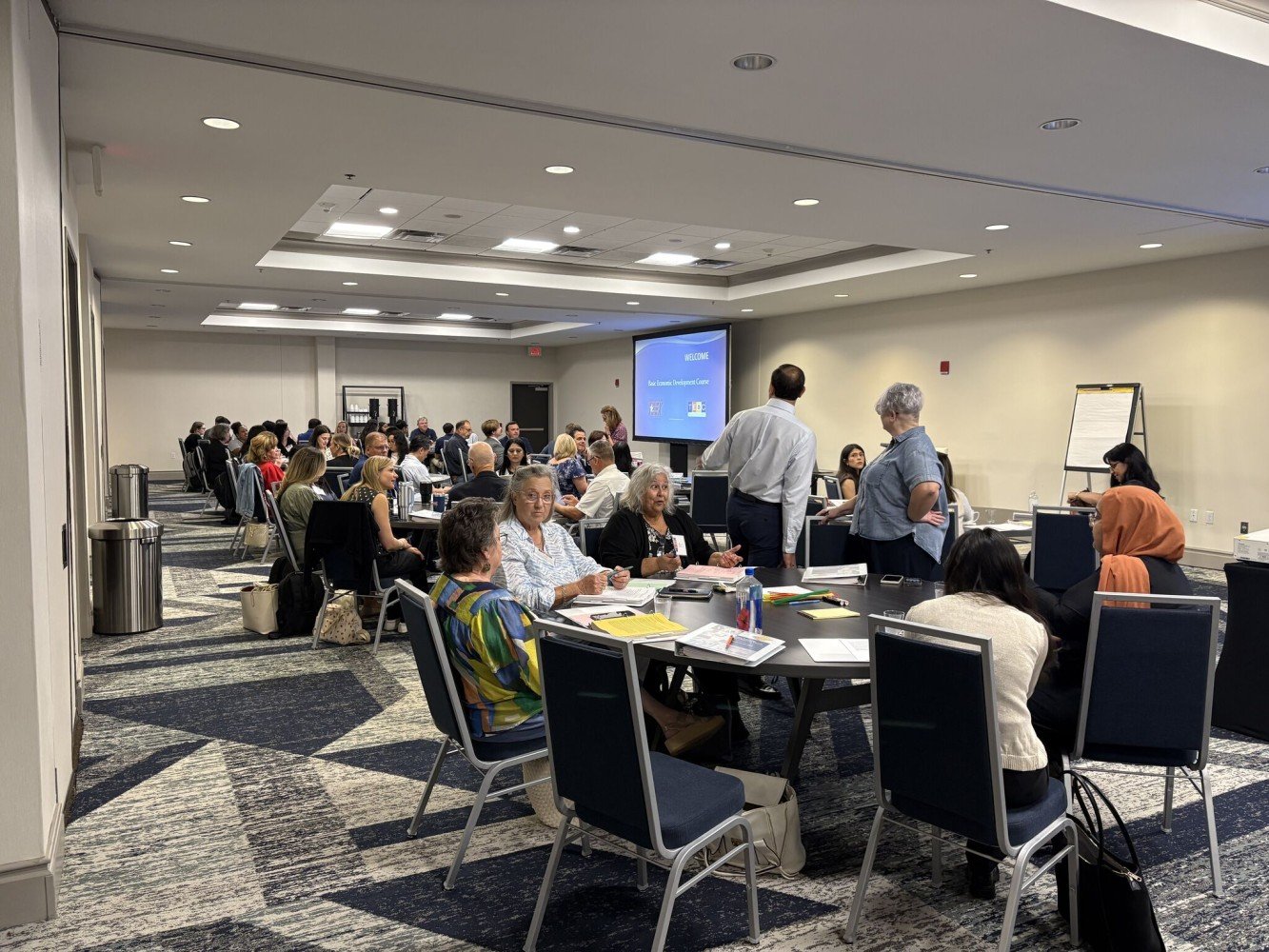
What every EDC leader is trying to solve
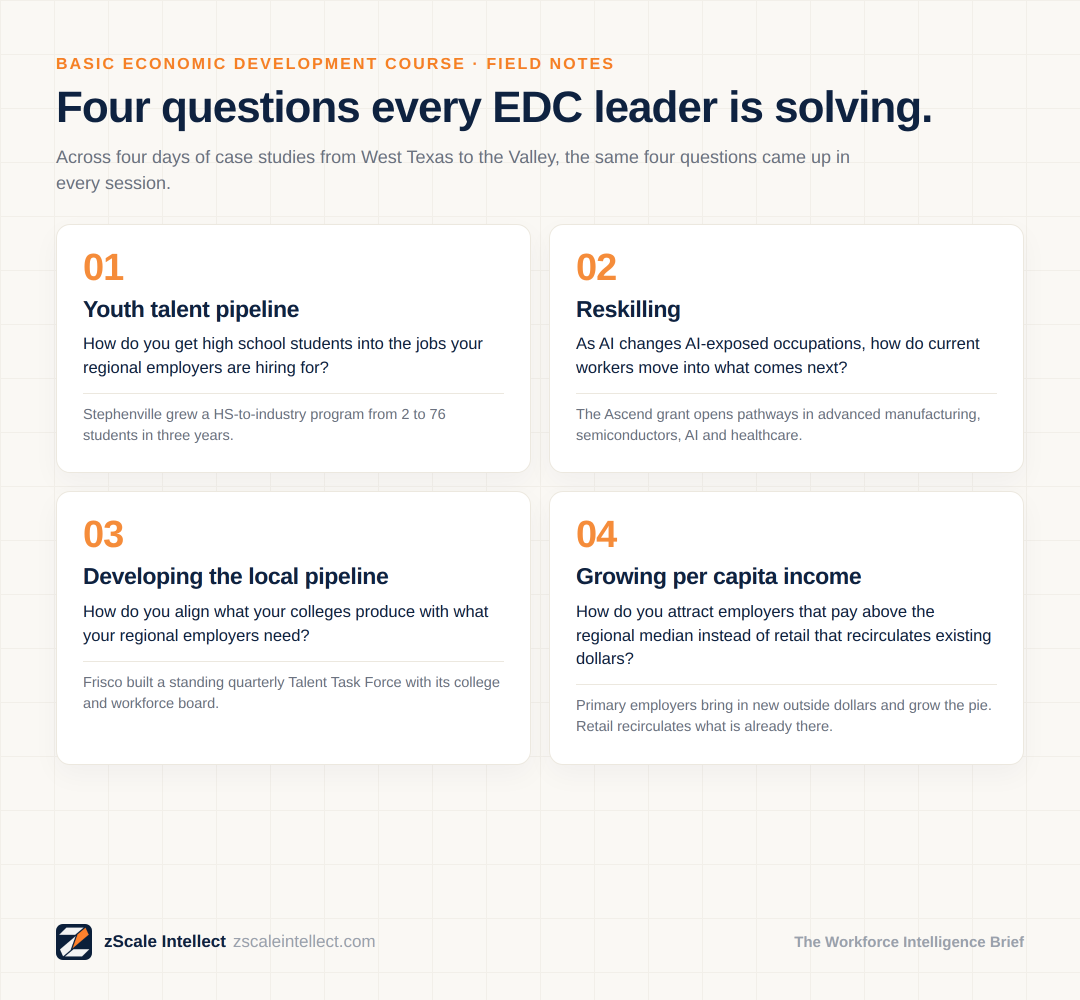
Across four days of case studies and hallway conversations, four questions came up in every session.
- The first is the youth talent pipeline: How do you get high school students into the jobs your regional employers are hiring for? Stephenville EDA's answer was to build a direct HS-to-industry pipeline that grew from 2 students to 76 in three years. L3Harris built pre-apprenticeship programs open to all 10 Hunt County ISDs. Raytheon has a partnership with Collin County. Bombardier is running an apprenticeship in Red Oak.
- The second is reskilling: As AI changes the work inside AI-exposed occupations, how do current workers move into what comes next? The Ascend grant covers advanced manufacturing, IT, aerospace and defense, semiconductors, AI, nuclear energy, healthcare and shipbuilding. Ascend eligibility opens a real reskilling pathway.
- The third is pipeline development and retaining local talent: How do you build a strong pipeline and keep the workforce you already have from leaving the region? Frisco EDC built the Talent Task Force with quarterly regional workforce boards plus Collin College plus UNT alignment. Demand alignment and Retention became a regularly reviewed item on their agenda, not an aspiration.
- The fourth is growing per capita income: How do you attract employers that pay above the regional median instead of retail that recirculates existing dollars? The instructors called it growing the pie versus slicing the pie. Primary employers grow the pie by bringing in mew revenue/money into the region and paying higher wages. Retail and services do not.
Five programs worth studying
Five programs from BEDC last week deserve wider study to address Workforce Constraints.
- Frisco Talent Task Force: Frisco EDC runs a standing quarterly alignment meeting with the regional workforce board plus Collin College plus UNT. It’s not just a one-time summit. That cadence keeps the EDC deal-pipeline in the same room as the workforce providers feeding it. Most regions I have talked to run these conversations annually or in response to a specific deal. Frisco built the meeting into the calendar first.
- Stephenville EDA HS-industry apprenticeship: Stephenville partnered with the local high school on an industry-integrated program. One participating company committed to hire up to 30 students. The program started with 2 students and grew to 76 within three years. That is a 38x growth curve on a small-city budget. The model is exportable to any regional employer plus HS pairing with an EDC willing to convene it.
- L3Harris pre-apprenticeship for Hunt County ISDs: L3Harris built a pre-apprenticeship program open to all 10 Hunt County ISDs. The key point is county-wide access, not single-district pilot. Pair it with Raytheon's partnership with Collin County plus Bombardier's apprenticeship in Red Oak. DFW's aerospace and defense corridor now has three named employer-anchored youth pipelines operating across four counties.
- Copperas Cove EDC military transition workforce program: Copperas Cove is inside a 12-mile radius of 35,000 active-duty soldiers with 500 transitioning military personnel per year and a projected 600,000 residents in 15 years. Their approach is to build the workforce program around the transition rhythm the local base already runs. Regions with any concentration of federal, military or large-employer transitions can apply the same design.
- Wylie EDC E3 flywheel: Wylie ran Manufacturing Day plus Small Business Week plus an entrepreneurship practicum in the same calendar year. The three programs together create a regional flywheel across Economic Development, Education and Employment. Any one of the three is common. Running all three back to back in a small-city EDC is the harder move worth noticing.
Zooming out from BEDC back to the DFW wide observations, the aggregate picture across 9 cities and 2 corridor maps continues to be valid.
Well over $10 billion in confirmed EDC capital investment has been tracked across 2024 to 2026. Six major manufacturing centers show up in the data. Four healthcare anchors do too. Two 2027 openings will shift their local labor markets. Arlington absorbed the 2026 FIFA World Cup surge as a single-year spike. While TCC, Collin College and Dallas College provide the talent supply across three community college systems. Multiple workforce boards coordinate the placement side.
What the Newsletters made visible is that DFW is not one workforce story. It is 11 versions of the same fundamental question with different demand shapes and different pipeline responses.
Two EDC directors replied to the last issue asking how they would pull this cut for their own region. If that is a question you have too, reply. Happy to meet with you and learn from what you are seeing in your city.
About this newsletter
The Workforce Intelligence Brief is published every two weeks read for leaders building the workforce pipeline in the AI economy. Sushma Vadlamannati is Founder and CEO of zScale Intellect (d/b/a zScale Capital), a Dallas-based workforce-intelligence platform connecting colleges, EDCs and employers with verified labor-market data. zscaleintellect.com.
#WorkforceIntelligence #WorkforceDevelopment #EconomicDevelopment #TalentPipeline #HigherEducation #DFW