
Miami’s $2 billion campus bet raises a question for Texas
Issue 12 · September 30, 2026 · 5 min read
How do university investments create opportunities for the businesses and workers already in a region?
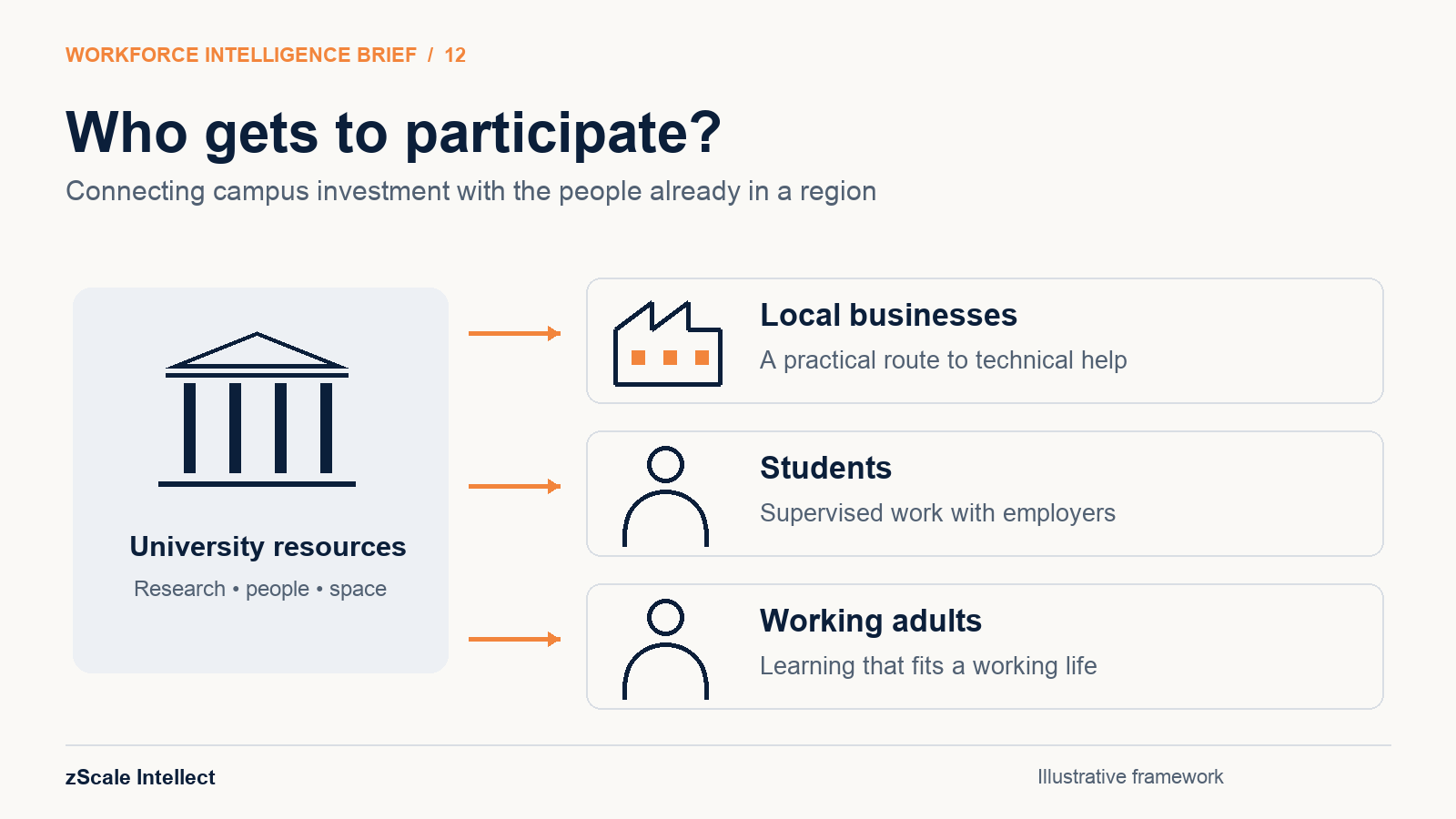
I’ve been following the development of Texas A&M–Fort Worth and what it could make possible for the region. Carnegie Mellon’s announcement of a new Miami campus made me think about who gets to participate when an investment like this arrives.
On September 30, 2026, CMU announced a $3 billion philanthropic gift from Citadel founder and CEO Ken Griffin. Two billion dollars will support the new Miami campus, with the remaining billion going to Pittsburgh. The Miami plans include industry research labs and venture studios. Initial enrollment is planned for 2028, subject to regulatory approvals. CMU announcement
For a local manufacturer, the opportunity might be help with a production problem. For a student, it might be a supervised employer project. For someone already working, it might be a practical way to learn new skills without leaving a job.
My view is that attracting new talent and creating opportunities for people already in a region belong in the same plan. A campus can support both. The routes into its resources need to be clear enough for people to use.
Fort Worth makes this a local question
Texas A&M–Fort Worth opened its first academic building this summer. Its next research and innovation building is scheduled for completion in 2029. The university says a regional needs assessment helped shape the programs, research and partnerships the campus should support. Campus opening announcement
Its partnerships page lists Tarrant County College among its academic partners and Lockheed Martin as a private-sector partner. That is a useful starting point for investigating how the campus connects with the surrounding economy. The listing itself does not explain what a TCC student or a small business can access. Texas A&M–Fort Worth partners
Imagine a small manufacturer whose inspection process produces inconsistent results. This is an illustrative example, not a company I have interviewed. The owner could benefit from technical help but may not know whether to contact a researcher, a training provider or an equipment specialist.
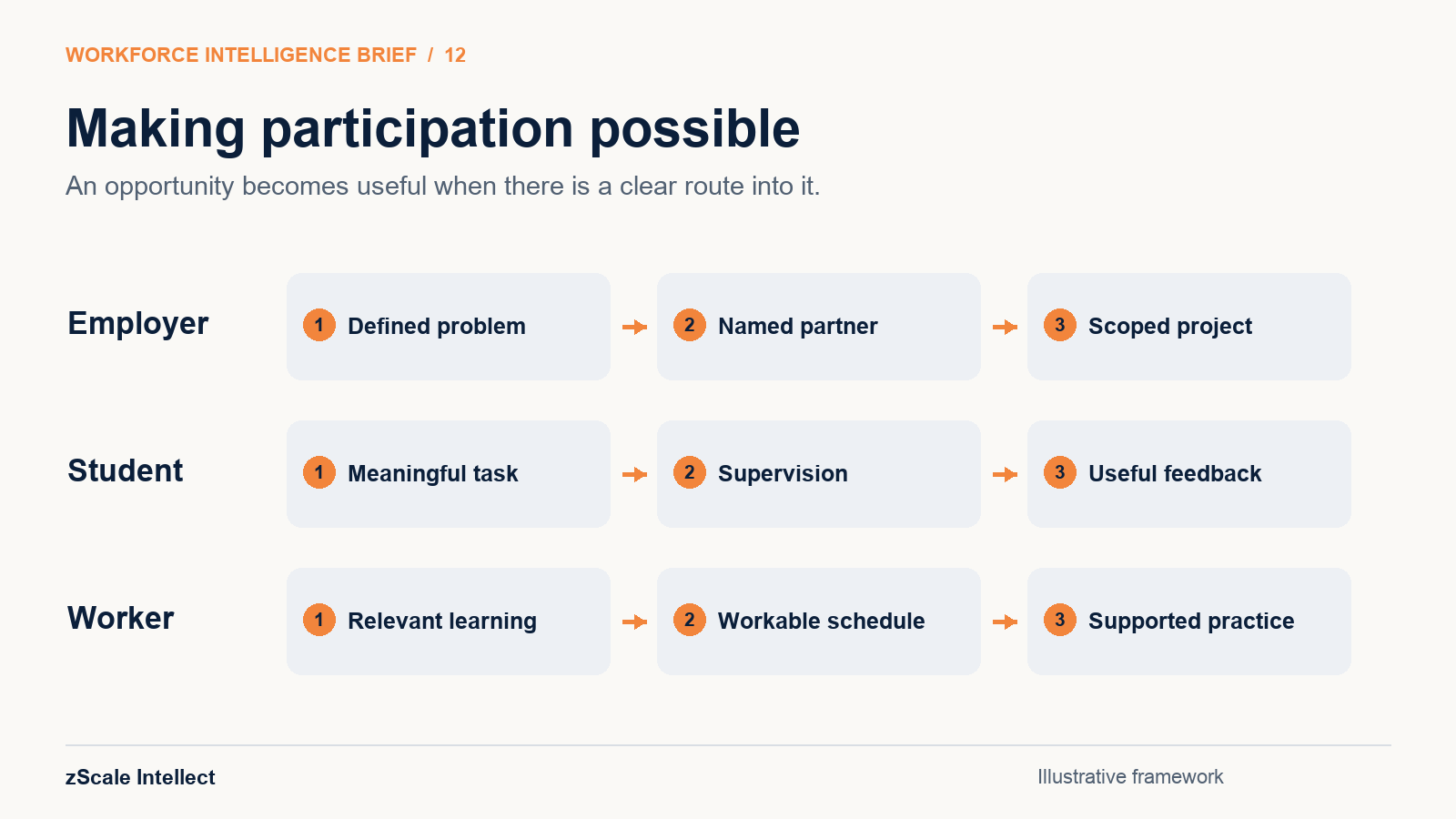
A useful connection starts with someone who can assess the problem and direct it to an appropriate partner. If the work becomes a student project, it needs supervision and a defined result. If a new process changes employees’ responsibilities, the business needs time and support to help them learn.
For an EDC, helping an existing employer find that route is a concrete form of business support. For a workforce board or college, it creates a more specific conversation about preparation than a general request for “more skilled workers.”
A local agreement shows what participation can look like
There is a useful example elsewhere in the same region.
Tarrant County College’s June 2026 agreement with American Airlines specifies that TCC will identify and refer qualified graduates. American will establish employment requirements and conduct interviews at campus recruitment events. The agreement also supports current employees’ education through flexible scheduling and accelerated course sequencing. TCC and American Airlines agreement
This is a separate partnership, not an outcome attributed to the Texas A&M campus. It describes intended arrangements rather than verified placement results.
Its value as an example is the specificity. A prospective student can see that qualifications and recruitment are part of the arrangement. An existing employee can see that the timing of study has been considered. The college and employer each have responsibilities.
That is the level of detail worth looking for when a regional initiative promises opportunity. Who can participate? What will they do? Who helps them take the next step?
Cornell offers a lesson about making time to participate
Cornell Tech’s Runway program provides another kind of access. Its September 2025 description explains that participating PhD founders receive support including salary, a research budget, workspace, intellectual-property assistance and mentorship over two years. Cornell Tech program description
The salary matters to the logic of the program. A researcher needs time to develop a business as well as somewhere to work and people to advise them. This is a specific founder program, not a general workforce offer.
The broader lesson I take from it is to examine what participation requires. A working adult may need a course that fits a shift schedule. An employer may need to release an experienced employee to supervise a project. A student may need paid work to make an opportunity feasible.
Those needs will differ by program. Identifying them early makes the proposed opportunity easier to assess.
Texas can build on what is already here
Miami’s proposal, Fort Worth’s developing campus and Cornell’s established program are at different stages. They cannot tell us which region has achieved the greatest benefit. They do help us ask more precise questions about access.
A new campus can bring capabilities a region does not yet have. Existing colleges, universities and workforce organizations can also work on immediate employer needs while a larger development takes shape.
For a community considering its next partnership, I would start with one employer problem and one group of potential participants. Agree on who will review the problem, what support participation requires and what result would justify continuing.
The evidence I want to follow is whether those arrangements turn into completed projects, useful learning and relationships that continue. An employer returning for a second project or a worker completing a relevant course would give us something concrete to examine.
Fort Worth’s development is worth following with that perspective. The opportunity includes attracting people and ideas to the region and helping the people already here take part in what comes next.
If you have worked on an employer–college partnership, what made it possible for people to participate? I would be interested in the practical detail that helped it work.
I write the Workforce Intelligence Brief for economic development teams, workforce boards and education partners. Subscribe for the next edition.